Poor radio performance is one of the most common issues we're asked to help with in the agricultural industry. Whether you're running fixed radios in your machinery or using handhelds around the yard, there are several well-known causes — and proven solutions. Here's what we've learned from years of diagnosing and solving radio problems on farms.
Fixed Radios: Common Causes of Poor Performance
Fixed radios fitted to tractors, combines, and other machinery can suffer from a range of issues that affect audio quality, range, and consistency.
Antenna and Cable Problems
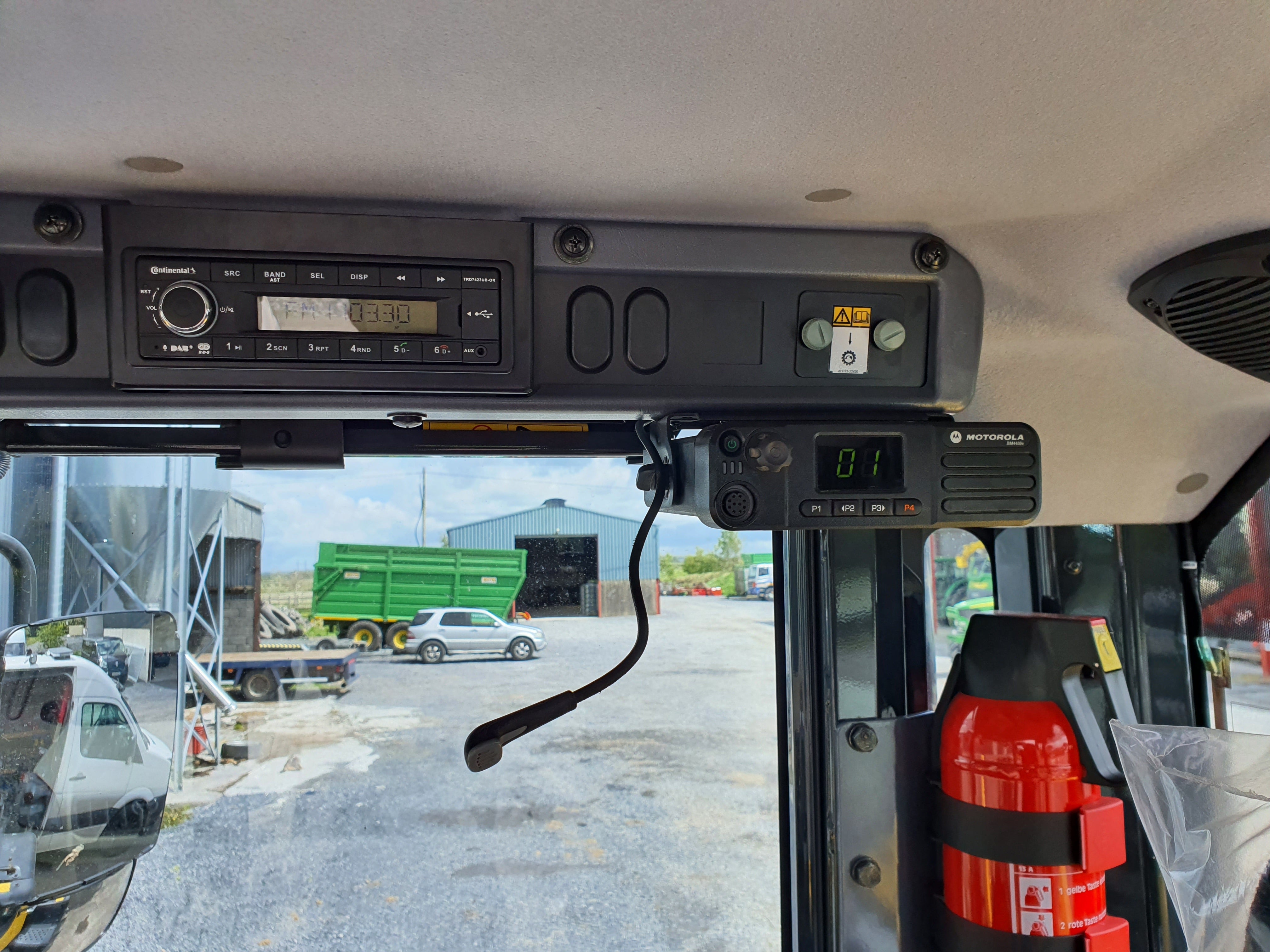
The antenna and its cabling are often the first place to look. In most cab installations, the antenna cable runs alongside other electrical wiring — power cables, CAN bus lines, and lighting circuits. This creates interference that gets into the antenna cable and degrades signal quality and range. It's a problem we've seen repeatedly, and it's why we redesigned our Tru Spring Antenna and upgraded to shielded specialist cable specifically to combat this.
Frequency Interference from Other Users
If other radio users in your area are operating on the same frequency but with a different tone or colour code, this can cause significant problems. You may find your coverage drops or becomes inconsistent when other users are present — even though your radio appears to be working normally. This is a frustrating but common issue, particularly in areas with multiple farming operations.
The good news is that this problem can be diagnosed. By scanning the frequency and monitoring activity, we can identify whether interference from other users is present and affecting your coverage. If interference is confirmed, the solution is typically to move to a different frequency or reprogram your radios with a unique tone or colour code that avoids the conflict. Get in touch with our team and we can carry out this diagnosis for you.
Bad Earth Connection
Two-way radios run off a 12V supply, and a poor earth connection on the installation is a surprisingly common cause of poor performance. A bad earth doesn't just affect range — it can cause audio issues and, over time, damage the radio itself. If you're experiencing intermittent problems, always check the earth before assuming the radio is at fault.
Consider Upgrading to Digital
If you're still running analogue radios, switching to digital can increase your coverage by up to 30% and deliver noticeably better audio quality. It's also worth knowing that analogue radio is being phased out, so upgrading to digital now future-proofs your setup and ensures you won't be left without a working system in the years ahead. A radio we highly recommend for agricultural use is the Kenwood NX-1700 VHF Digital Mobile Radio - Complete Agri Kit — purpose-built for the demands of farming environments.
Handheld Radios: What to Expect and How to Improve Performance
Handheld radios operate at a lower power output — typically 4W or 5W — which means range is more limited than a fixed installation, particularly when used inside a vehicle cab. The cab itself acts as a Faraday cage, significantly reducing the signal.
In our own trials, a handheld radio will achieve up to 2 miles in open space and around 1 mile in difficult terrain when used outside a vehicle. Inside a cab, expect considerably less.
Battery Degradation
Handheld performance often declines gradually over time, and the battery is usually the culprit. We recommend replacing the battery every 18–24 months to maintain performance — it's a simple fix that makes a significant difference.
Our Recommended Handhelds
For agricultural use, we recommend the Hytera BD615 Digital Handheld or the Motorola R2 Portable Two-Way Radio Digital Handheld — both are digital handhelds that offer reliable performance, good audio quality, and the coverage benefits of digital technology.
Talk to the Experts
At LightComm, we don't just supply two-way radios — we solve radio problems. With many years of experience in the agricultural industry, we understand the specific challenges that come with farm environments and can advise on the right equipment and installation for your operation.
If your radios aren't performing as they should, get in touch with our team or browse our agricultural radio solutions.