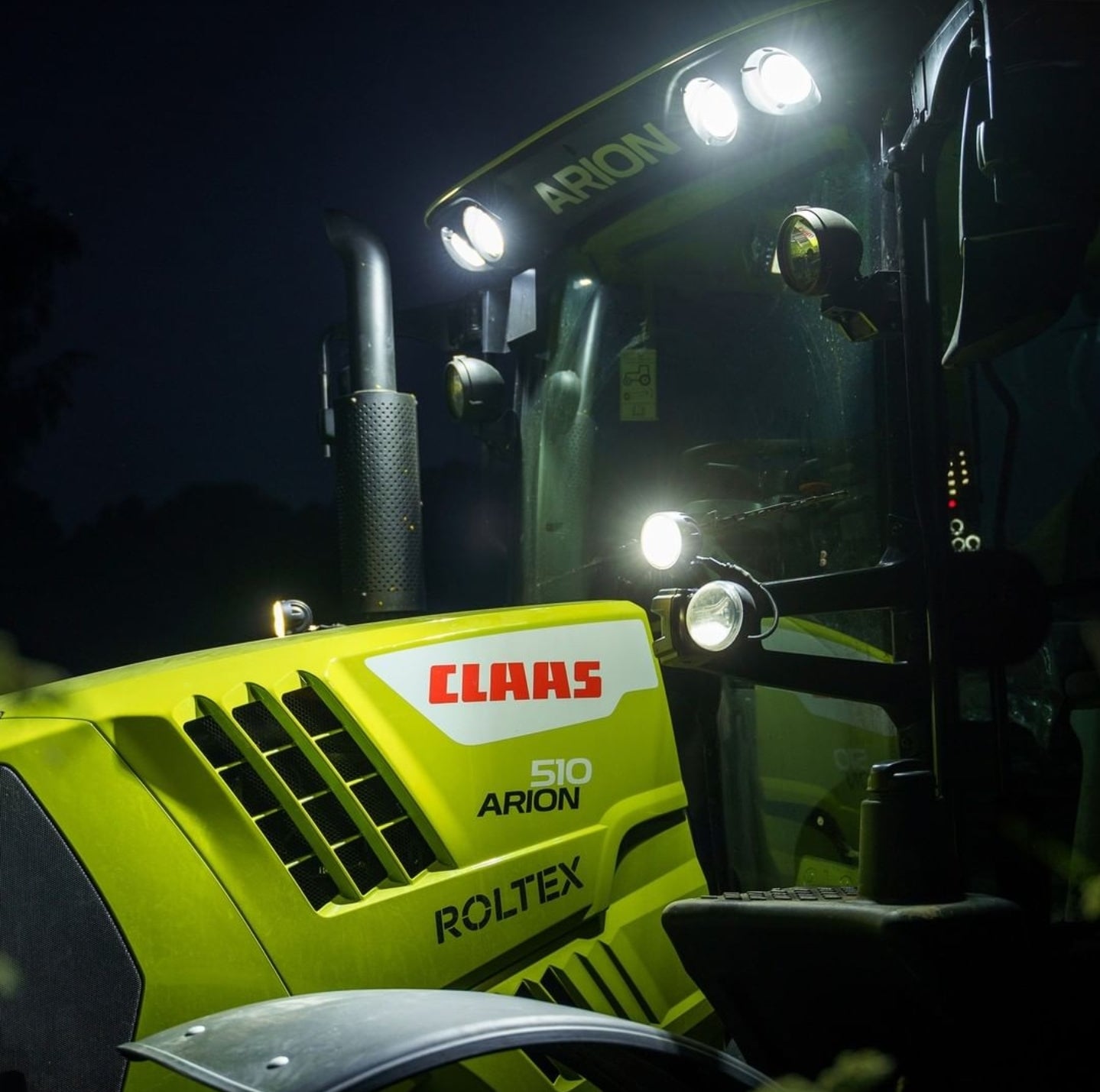
Good lighting is essential for safe and efficient agricultural work, especially during early starts, late finishes, and winter months. With so many LED work lights available, choosing the right option for your tractor or agricultural machinery can feel overwhelming. Understanding beam patterns, power requirements, and build quality will help you select lighting that genuinely improves visibility and productivity on the farm.
This guide explains what to look for when choosing LED work lights for tractors, combines, telehandlers, and other agricultural vehicles.
Why Upgrade to LED Work Lights?
LED work lights have become the standard choice in agriculture, replacing traditional halogen lights on most modern machinery. Compared to halogen lighting, LEDs offer:
- Brighter, more consistent light output
- Lower power consumption
- Longer service life
- Improved reliability in harsh conditions
For farmers and contractors working long hours, these benefits translate into better visibility, reduced electrical load, and fewer replacements over time.
Understanding Beam Patterns: Flood vs Spot
One of the most important factors when choosing LED work lights is the beam pattern.
Flood Beam Work Lights
Flood beam lights provide wide, even illumination and are ideal for:
- Yard work
- Field operations
- Loader and implement visibility
- General area lighting around the machine
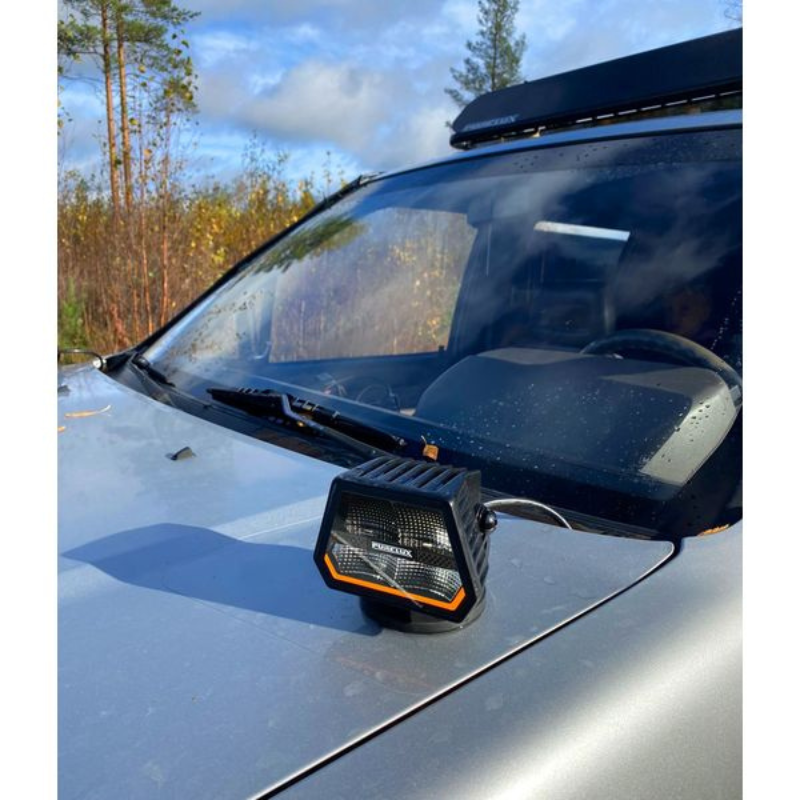
Flood beams are commonly mounted on cab roofs, rear panels, and side positions to light large working areas.
Spot Beam Work Lights
Spot beams focus light into a narrower, longer-distance beam and are better suited for:
- Forward visibility at speed
- Access tracks and lanes
- Long-distance viewing in open fields
Many tractors benefit from a combination of flood and spot beams to achieve balanced lighting in all directions.
Power, Brightness & Efficiency
When choosing LED work lights, higher wattage does not always mean better performance. A well-designed 40–60W LED light can outperform a poorly designed higher-wattage unit.
Key things to consider:
- Efficient light output rather than raw wattage
- Even light spread without dark patches
- Stable performance across long working hours
Quality LED work lights deliver strong illumination while keeping power draw low, reducing strain on the tractor’s electrical system.
Compatibility with Agricultural Machinery
Most agricultural LED work lights operate within a 9–32V range, making them suitable for tractors, combines, telehandlers, sprayers, and trailers.
Before purchasing, it’s important to check:
- Physical dimensions and mounting points
- Connector type and cable length
- Whether the light replaces an existing OEM or halogen unit
Choosing a compatible light ensures straightforward installation and reliable operation.
EMC & Radio Interference – Why It Matters
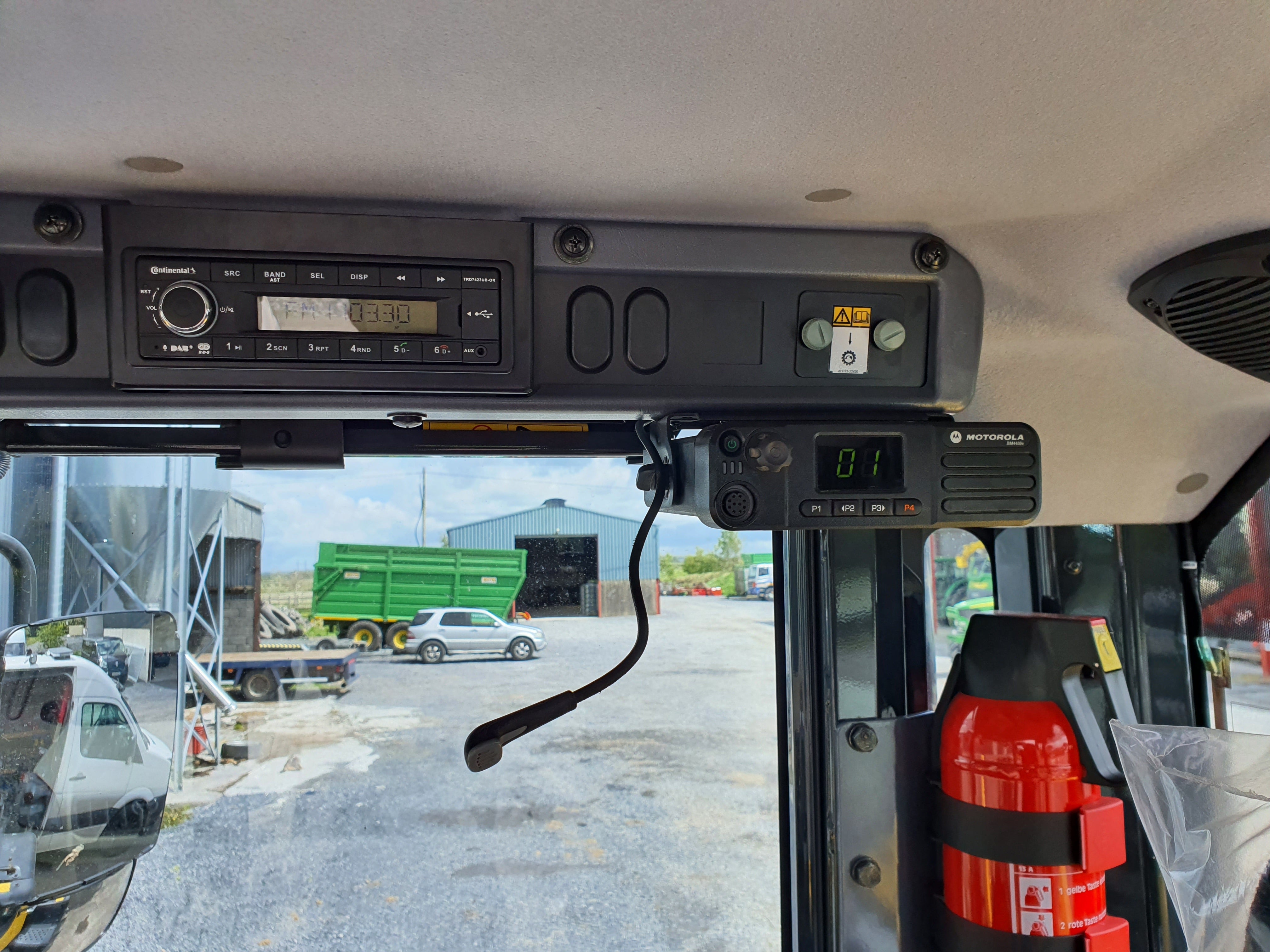
Modern tractors rely heavily on in-cab electronics, including radios, GPS systems, and control units. Poor-quality LED lights can cause electrical interference, leading to disrupted radio communication or system faults.
High-quality LED work lights are designed to meet EMC standards, helping to minimise interference with onboard electronics. This is particularly important for machines using two-way radios or GPS guidance systems.
Choosing the Right LED Work Lights for Your Tractor
The best lighting setup depends on how and where your machinery is used. A well-planned combination of flood and spot beams, mounted in the right positions, can dramatically improve visibility, safety, and working efficiency.
Investing in quality LED work lights helps ensure reliable performance during long working days and challenging conditions, making them a worthwhile upgrade for any agricultural operation.
Selecting the right LED work lights isn’t just about brightness — it’s about beam pattern, compatibility, durability, and electrical reliability. By choosing lights designed specifically for agricultural use, you can improve visibility, reduce fatigue, and work more safely in all conditions.
Try our LED Guide to find the right solution for your tractor or equipment.
Check out our 2026 guide to the best LED lights for farmers.