One of the most common questions farmers ask when upgrading tractor lighting is:
“How many lumens do I actually need?”
The answer depends on:
- the size of your machinery
- the type of work you do
- operating speed
- working environment
- mounting positions
Choosing the correct brightness is important because lighting that is too weak reduces visibility, while lighting that is too powerful can create glare and operator fatigue.
What Are Lumens?
Lumens measure the total amount of visible light produced by a lamp.
The higher the lumen output:
- the brighter the light appears
- the larger the illuminated area
- the greater the working visibility
Recommended Lumens for Agricultural Machinery
Small Tractors
Recommended:
1,500–3,000 lumens per light
Suitable for:
- livestock work
- yard duties
- compact tractors
- utility farming
Medium Agricultural Tractors
Recommended:
3,000–5,000 lumens per light
Suitable for:
- general field work
- spraying
- cultivation
- transport operations
Large Machinery and Harvesters
Recommended:
5,000–10,000+ lumens per light
Suitable for:
- combines
- forage harvesters
- large cultivation equipment
- night harvesting
Flood vs Spot Lighting
Lumens alone do not determine performance.
Beam pattern is equally important.
Flood Lights
Flood beams spread light across a wide area.
Best for:
- reversing
- side visibility
- implements
- livestock yards
Spot Lights
Spot beams project further into the distance.
Best for:
- driving
- field navigation
- road travel
- forward visibility
Too Many Lumens Can Be a Problem
Excessive brightness can create:
- reflective glare
- eye fatigue
- reduced visibility in rain or fog
- poor contrast
A balanced lighting setup is usually better than simply buying the brightest possible light.
Best Lighting Setup for Most Farms
A practical agricultural setup often includes:
- front spot beams
- rear flood lights
- side work lights
- low-glare cab lighting
This creates balanced visibility around the machine.
Power Consumption and Efficiency
LED work lights produce far more usable light than traditional halogen systems while using less power.
This helps reduce:
- battery drain
- alternator strain
- electrical load
How Mounting Position Affects Brightness
Where lights are mounted can dramatically affect visibility.
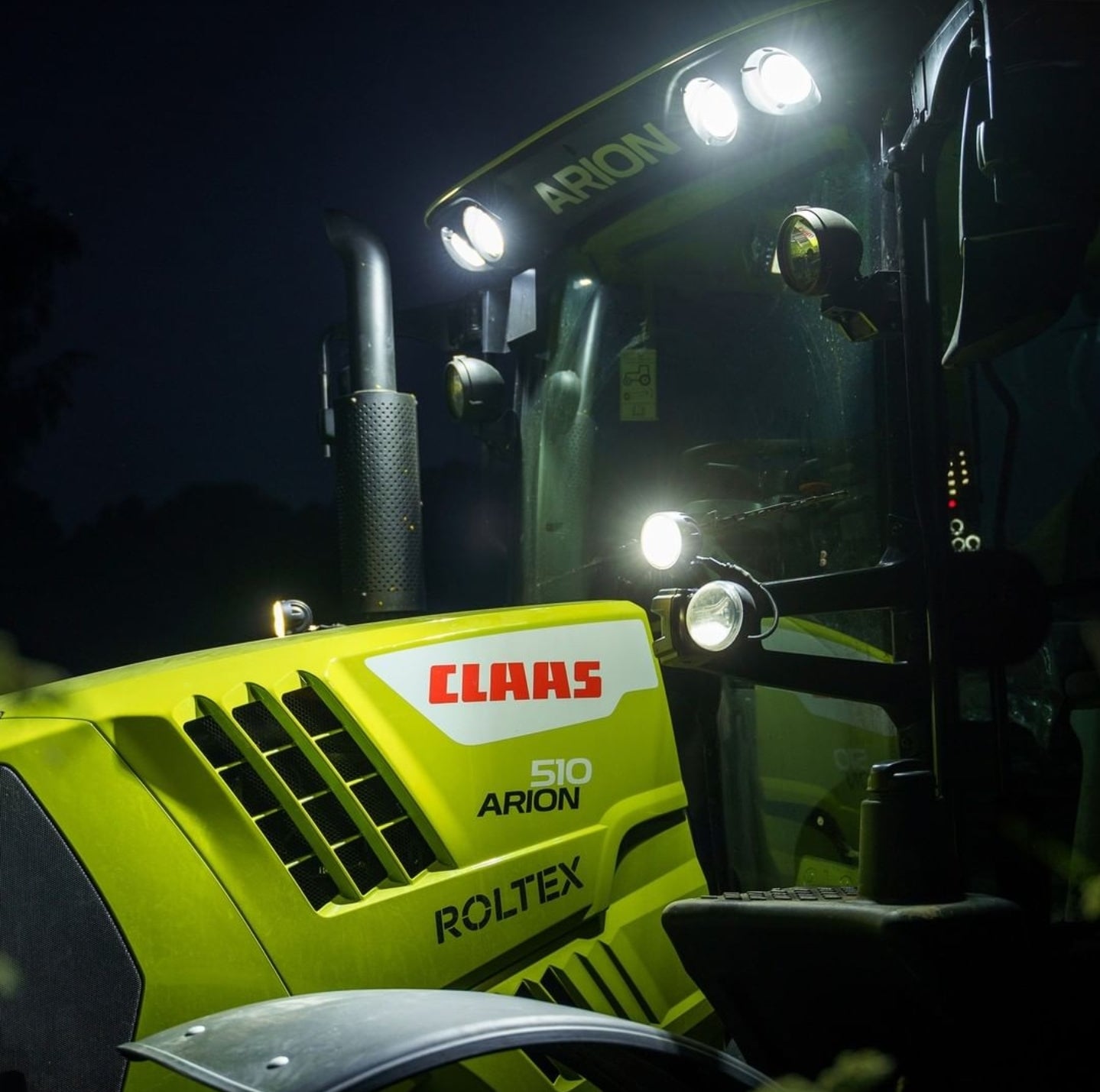
Roof Mounted Lights
Roof-mounted work lights provide:
- wider coverage
- improved field visibility
- reduced shadows
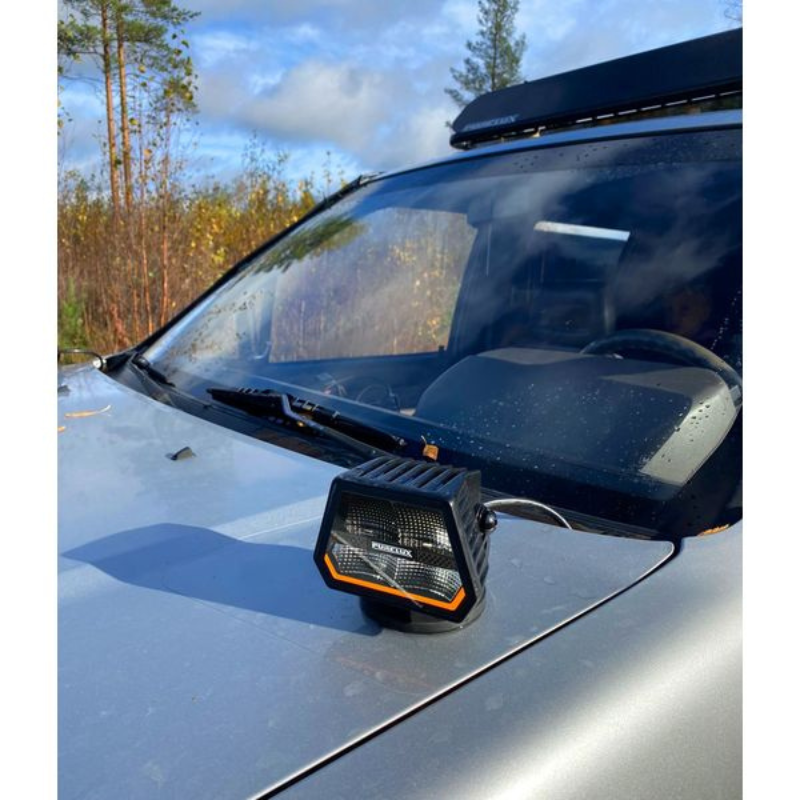
Lower Mounted Lights
Lower mounted lights can help:
- reduce glare
- improve close-range visibility
- illuminate implements and trailers
Combining multiple mounting positions usually produces the best results.
Choosing the Right Colour Temperature
Most agricultural LED lights operate between:
- 5,000K
- 6,500K
This creates a daylight-style white light which improves:
- contrast
- depth perception
- visibility in poor weather
Very blue lights can sometimes increase eye fatigue during long shifts.
Why LED Technology Matters
Modern LED systems offer:
- instant brightness
- low maintenance
- vibration resistance
- longer lifespan
This makes them ideal for demanding agricultural environments.
Our Thoughts
The ideal tractor lighting setup is not about maximum brightness.
It is about creating safe, even visibility that improves productivity without creating glare or electrical problems.
Use our lighting configurator to find the right lights for your tractor.
Choosing the correct lumen output can dramatically improve night-time farming operations while reducing fatigue and improving safety.
Check out our 2026 guide to the best LED lights for farmers.